Best Practices for Moderating Jeopardy Games


Jeopardy games can transform any classroom, training session, or event into an engaging, memorable experience. However, moderating these games can go one way or another, especially if you don’t prepare much for it.
Most of the time, you think that having great questions (tricky, witty, or totally funny) is all there is to make it an experience for everything. But the real difference between a game that’s fun and memorable? It’s how you run it.
Poor moderation leads to confusion, arguments, and bored participants who end up staring at their phones instead of listening intently. Effective moderation keeps energy high, ensures fair play, and creates an atmosphere where everyone wants to participate and learn.
So if you want to be a master moderator and be like a seasoned TV show host, this guide will show you how. Here, you will get essential techniques you need to run smooth, engaging Jeopardy games from start to finish, regardless of whether you're creating your questions or using an online platform.
Preparing for the Game
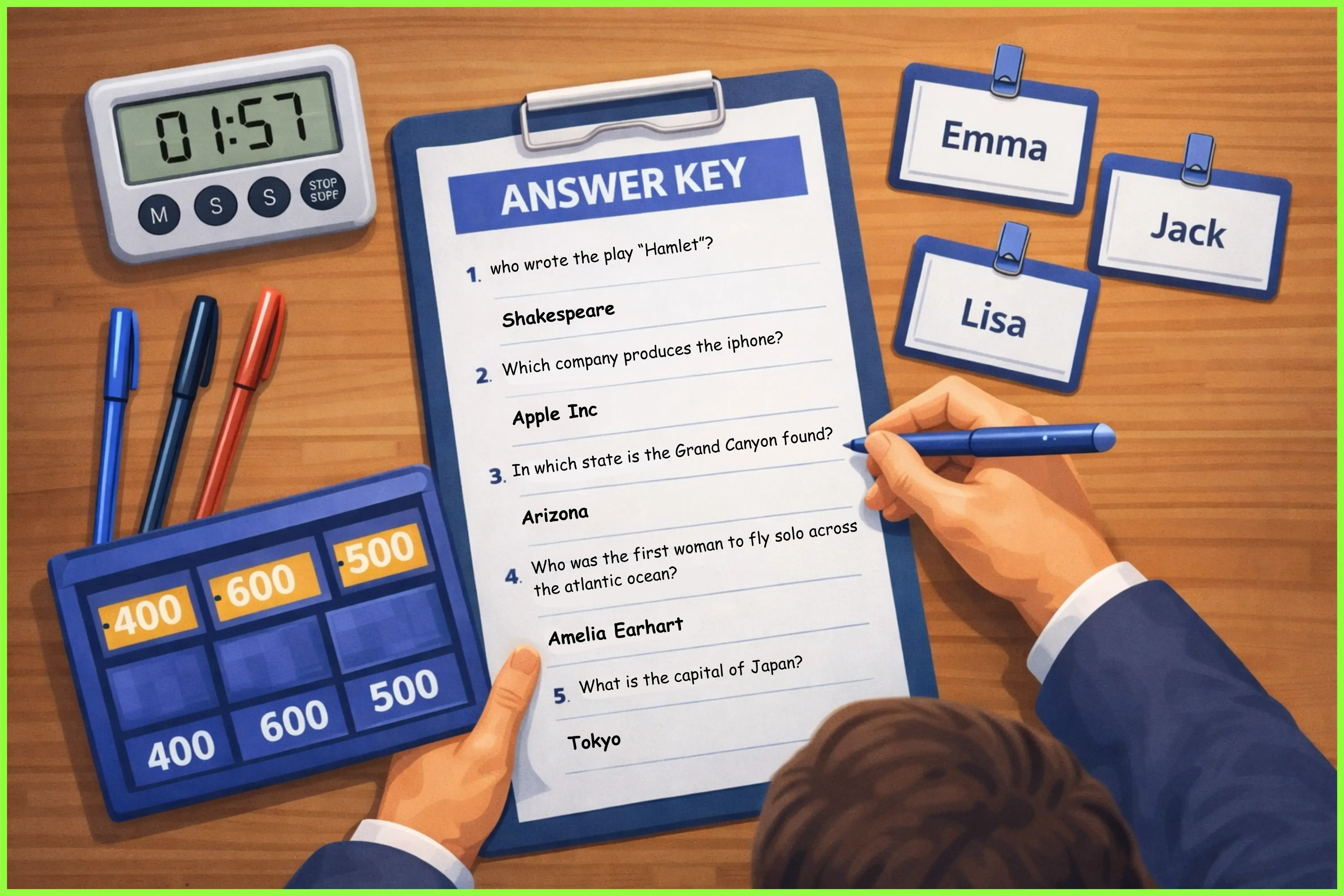
Let’s start with the boring, yet crucial step in moderating a Jeopardy game: preparation.
The game prep may not be as fun, but taking note of these steps will ensure a smooth and engaging gameplay.
Print a comprehensive answer key.
Don’t just simply write down the correct answer; include different ways people might say it and the most common wrong answers you’ll hear.
For example, if the correct answer is "What is photosynthesis?" your key should note that "photosynthetic process" or "the process where plants make food from sunlight" are acceptable alternatives. This will save you from super awkward moments when someone gives a good answer - close to perfect - and you’re clueless if it should count.
You can also do a little research or ask other people organizing the game to double-check with alternative answers.
Familiarize yourself with all the content
Go through every single question and answer until you can recite them in your sleep. This lets you drop helpful hints when teams get stuck, clear up confusing questions, and make fair calls when answers are close but not exact. Most pros run through their entire game at least once before showtime to catch problems.
Set up your space right
Nobody likes feeling at a disadvantage against the other team. There are a lot of things to consider for this step, especially in a game like Jeopardy.
Things to consider include their view of the board, the sound, the spacing between teams (to prevent overhearing each other during strategy sessions), and having extra pens and papers handy.
These may seem like little details, but it’s best to ensure it will be a fair game for everyone right from the start.
Create team assignments in advance
Pre-made teams save tons of time and prevent that awkward popularity contest when people pick their groups. If you're doing it live, have a fair system ready. Count off, draw names, whatever works for your crowd.
Get everything organized
Check if everything you need to become an effective moderator is in place and is working correctly. This includes the timer, scoreboard, props, and prizes that you plan to use. Whether it’s a digital or manual one, make sure everything is working as it should.
This step prevents you from scrambling for stuff and losing your momentum when you could’ve had a flawless game moderation.
Setting Up the Main Gameplay Rules
Once you've prepared your materials and space, it’s time to make the choices that will make or break the whole game for everyone.
These fundamentals, such as the team structure, answering methods, and scoring, will shape how participants interact and compete throughout the event. If you get everything right, you’ll have people talking about your game for weeks! Let’s get to it.
Team Composition
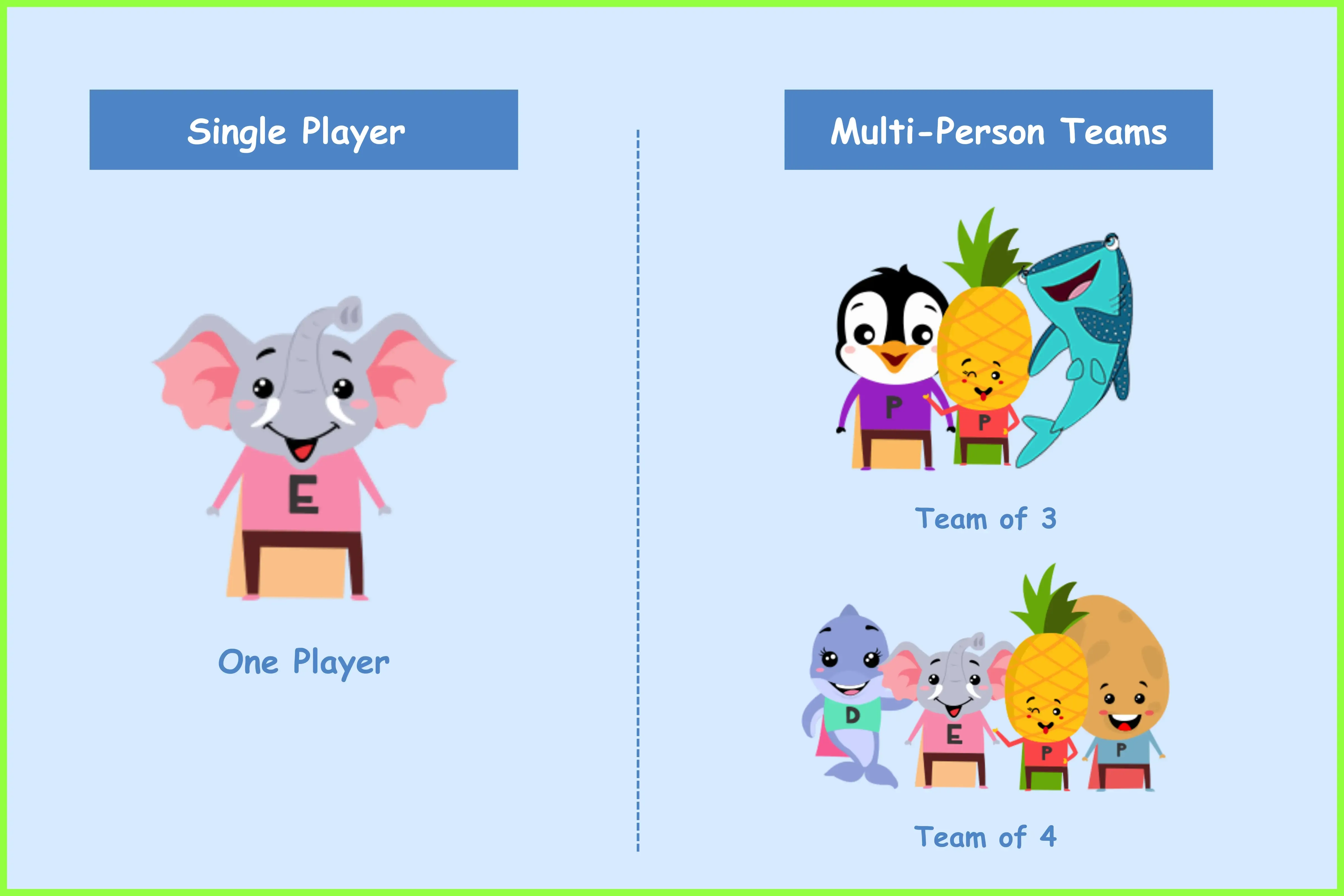
Your team structure has a great impact on participation levels and game dynamics. It’s best to choose how you compose each team based on your group size and learning objectives.
- Individual Players: This works best for smaller groups—maybe 12 people or fewer. Everyone’s on their own, which creates natural accountability. Choosing this option is ideal for testing individual knowledge or sparking friendly competition.
- Multi-person teams (3-5 members): If you plan to encourage collaboration and peer learning, having multi-person teams can address that goal. It gets everyone talking and learning from each other, creating more buzz and discussion during the game. This works way better for bigger groups and helps shy people jump in without feeling like they’re on the spot.
Buzzer System
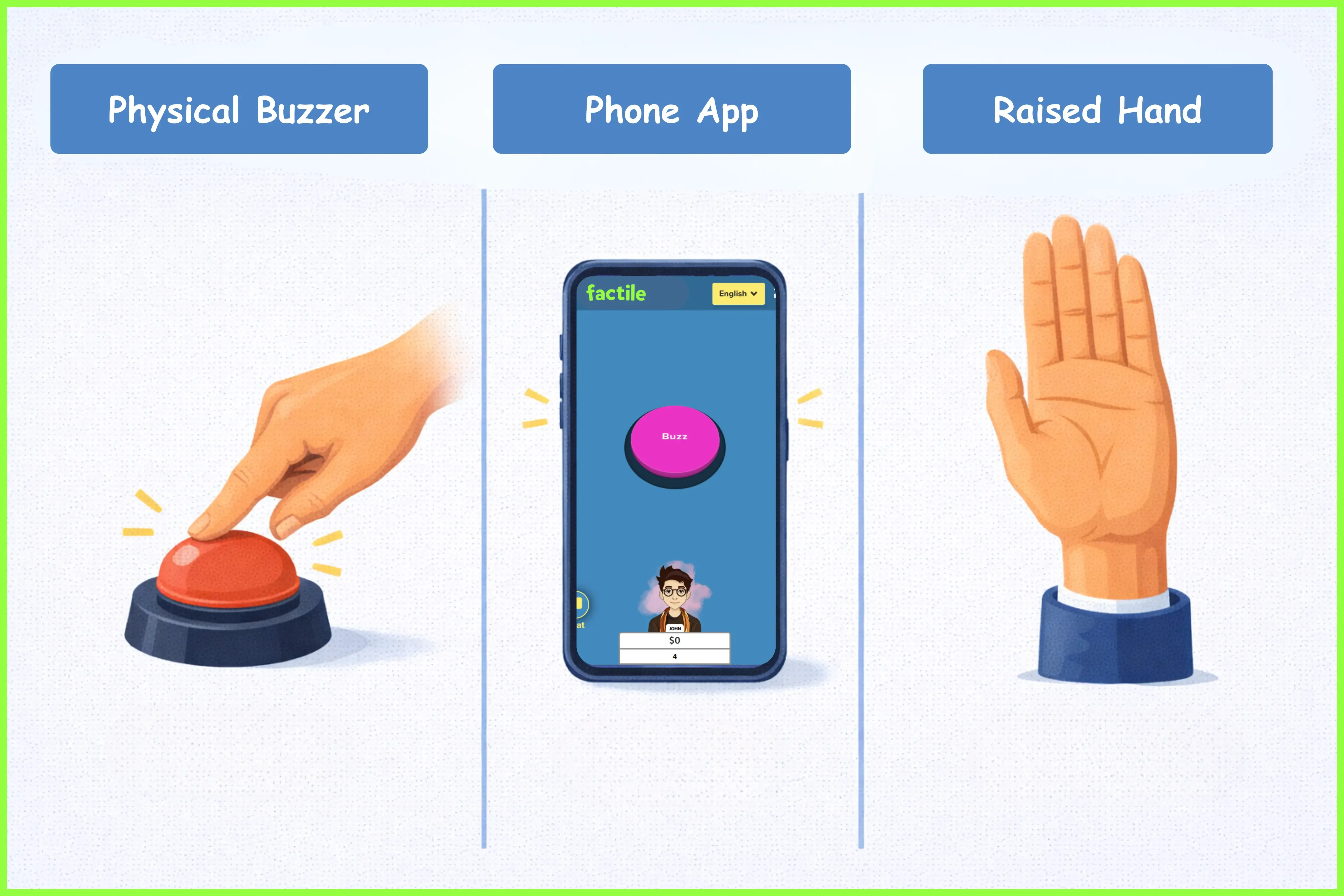
How people “buzz in” completely changes the whole feel of your game. But while using advanced, techy buzzers makes it super cool, you also need to consider how comfortable your players are with technology and if it fits the game format.
Here are some options you can consider:
- Physical buzzers: Give you an authentic Jeopardy experience and get people pumped up! But you’ll need to have the equipment ready and might need to shell out a bit of money for it.
- Digital buzzers: Built into most Jeopardy maker platforms, making it super convenient. This works great for online or remote sessions.
- No buzzers (hand-raising): Keeps things simple and works for everyone. Just make sure to prepare those eagle eyes to see who’s the fastest one!
- Answer method: Technically, this is not a buzzer system. But in relation to buzzing in, you also need to decide if the players should speak or type/write their answers. Speaking is more natural in the Jeopardy gameplay, but typing works best in group play or online sessions.
Daily Doubles

Daily Doubles adds more excitement and thrill to your Jeopardy game. This aspect of the game can easily shift the scoring favor, depending on how the teams strategize. Here are a few things to consider if you plan to add this to your game:
- When to enable: Use them when you want to shake up the scoring or remark smart risks. They’re absolutely preferred for competitive environments.
- Frequency: In traditional Jeopardy, there is one Daily Double question in round 1, and two in round 2. However, you can adjust this based on how long your game is and how much excitement you want.
- Rules to explain: The rules are simple: whoever picks the square or question gets to bet from a minimum of 1000 up to their current score. Only the team that picks it can answer.
Timer and Scoring
These settings control how fast your game moves and how much pressure people feel. It also influences how much they will take risks, especially in Daily Doubles and Final Jeopardy.
- Timer options: Timers can vary depending on the complexity of the question. For example, 10-15 seconds for easy ones, while 30-45 seconds for difficult ones, especially for ones that teams need to think or talk through their answers.
- Point values: You can follow Standard Jeopardy scoring, ranging from 200 to 1000. You can go for a lower range for kids, or a higher range for serious competitions.
- Incorrect answers: Giving penalties for wrong answers because it could affect the player’s morale and can tip the balance in scoring too much. Consider just giving zero instead, especially in a classroom setting.
Starting the Game
So, it has come to this: starting the game.
Your opening sets the tone for everything that happens next. Nail this part and you’ll hook everyone right off the bat.
- You pick the first question: Choose a medium difficulty option from a category that most people are familiar with. This sets the perfect energy for everything that follows.
- Buzzer etiquette: Teams have to wait until you’re completely done reading before buzzing. If you’re doing hand-raising, the first hand up gets to answer.
- Timer rules: Tell them exactly how long they have to buzz in after you read the question and how long they get to answer once they buzz.
- Basic gameplay: First person to buzz in gets first shot at the answer. Get it right? You score those points and pick the next question. Get it wrong? The other teams get their turn. It’s up to you if you’ll allow rereading the questions for them or not.
- Daily Double tiles: When one pops up, only the person who picked that square can answer. They bet first, then see the question. If they get it right, they earn the doubled score. If not, they lose the score they wagered.
- Final Jeopardy: Everyone bets, then everyone answers the same question at the same time.
Running the Game
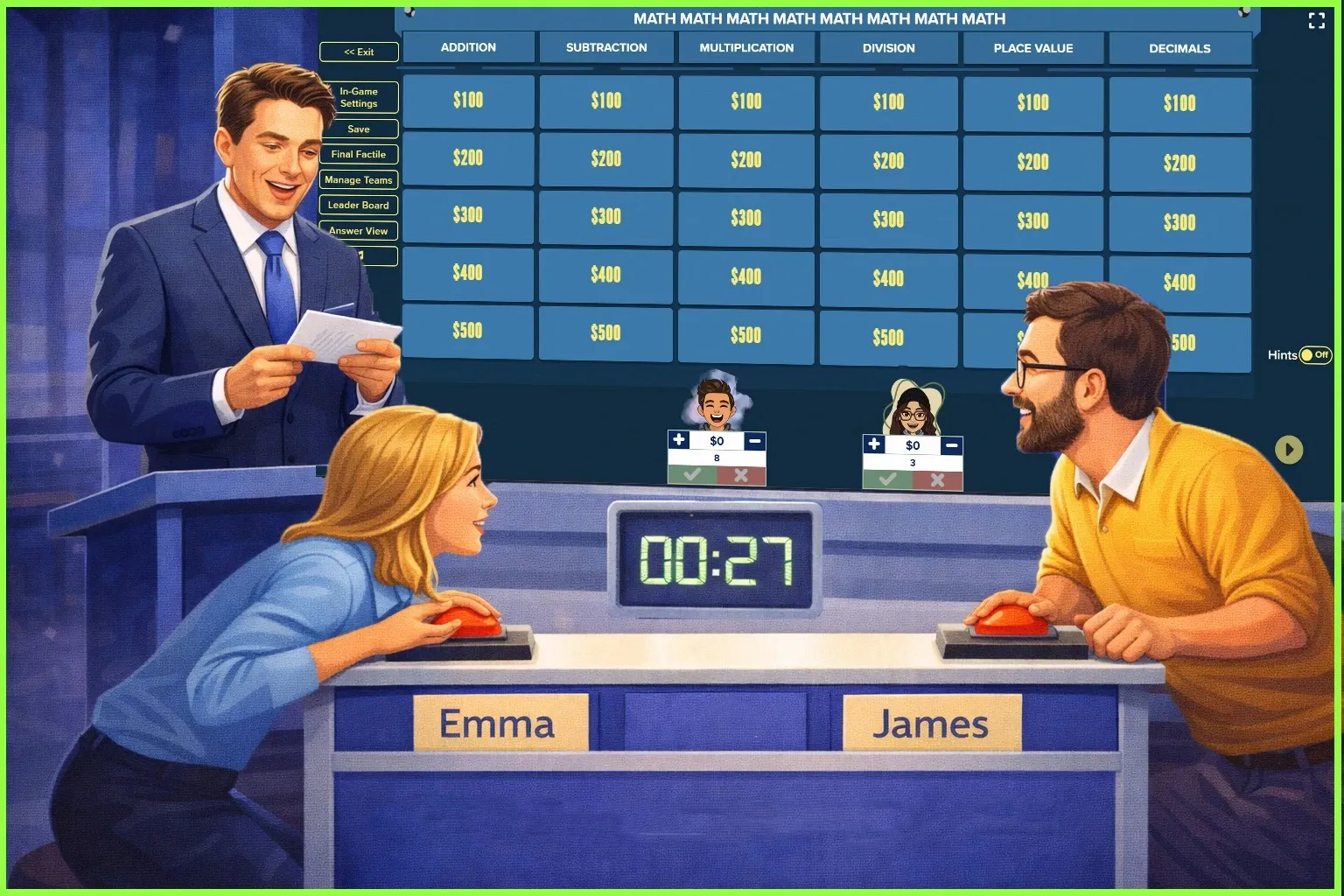
Now that things have started, play it as if you’re Alex Trebek! Effective game moderation requires constant attention to pacing, engagement, and fairness while maintaining the energy that makes Jeopardy exciting.
- The player who answers a tile correctly gets to pick the next one: Once a player answers correctly, immediately invite them to select the next category and point value. Keep it snappy and don’t let it drag out to keep the momentum rolling.
- Keep the game moving: If someone’s taking forever to choose, give them a gentle nudge. “What’s it gonna be?” usually works perfectly.
- Manage the timer effectively: Start the timer consistently when you finish reading each clue, and give them a signal or a countdown when it is winding down.
- Handle wrong answers nicely: Give a quick “Not quite!” or “Good try!” then immediately move to the next person. Save explanations for after the question gets answered.
- Keep your eye on quiet teams: You’ll notice a few players who are more silent than the rest. They may be nervous, shy, or just feeling a lot of pressure. Call on them for easier questions or make sure everyone on a team gets chances to shine.
- Settle disputes fast: When teams challenge your judgment, listen to their case but make your decision quickly. Use your answer key. If you mess up, fix it right away and move on.
- Build excitement throughout: Celebrate great answers, build suspense before Daily Doubles, and keep energy up even when scores get lopsided.
Final Jeopardy
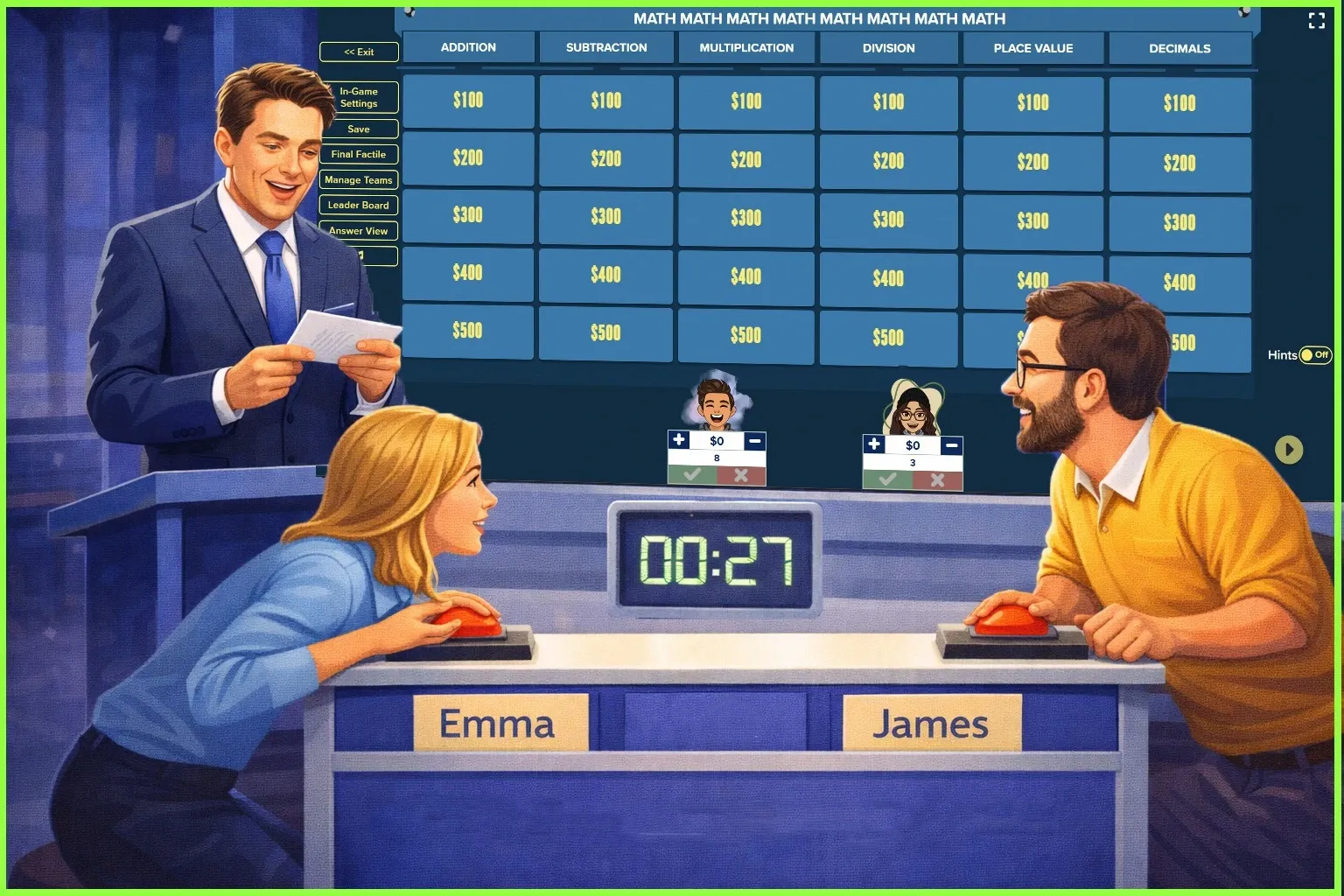
Final Jeopardy is the climax of the game. This round can sometimes tip the scoring into someone else’s favor. It will all boil down to strategy.
- Build anticipation by reviewing current scores: Announce current scores and explain how Final Jeopardy could flip everything upside down. Leaders might play it safe while underdogs need to go big.
- Manage the wagering process systematically: Give teams time to make their bet - about 2-3 minutes to decide their wager. Remind them they’re betting on the category, not the specific question. Collect all bets before showing the question.
- Present the Final Jeopardy clue with flair: Read the category, pause for effect, the reveal the question with drama. Give them 3-5 minutes to write their answers. Amp the atmosphere up a bit by adding a background music to make it feel like they’re really on the show!
- Collect answers before revealing results: Have all teams submit their answers at the same time.
- Reveal answers strategically to add drama: Start with the team that has the least chance of winning or with the lowest score, then work it up to the leaders. Then reveal the overall winner after the Final Jeopardy.
Recognizing the Winner(s)

How you end matters just as much as how you start.
Celebrate everyone, not just the winners! Point out great answers, excellent teamwork, and creative thinking. Considering fun awards beyond just “first place” - things like “Best Comeback,” “Most Creative Answer,” or “Best Team Spirit.”
If people have questions about scoring, explain it clearly. This is especially important in schools where the learning process matters as much as winning.
Ask what they learned or what surprised them. This reinforces the educational material and provides feedback for future reference.
Thank everyone genuinely for jumping in. Remember, great Jeopardy games only work when people participate enthusiastically.
Making Your Next Jeopardy Game Even Better
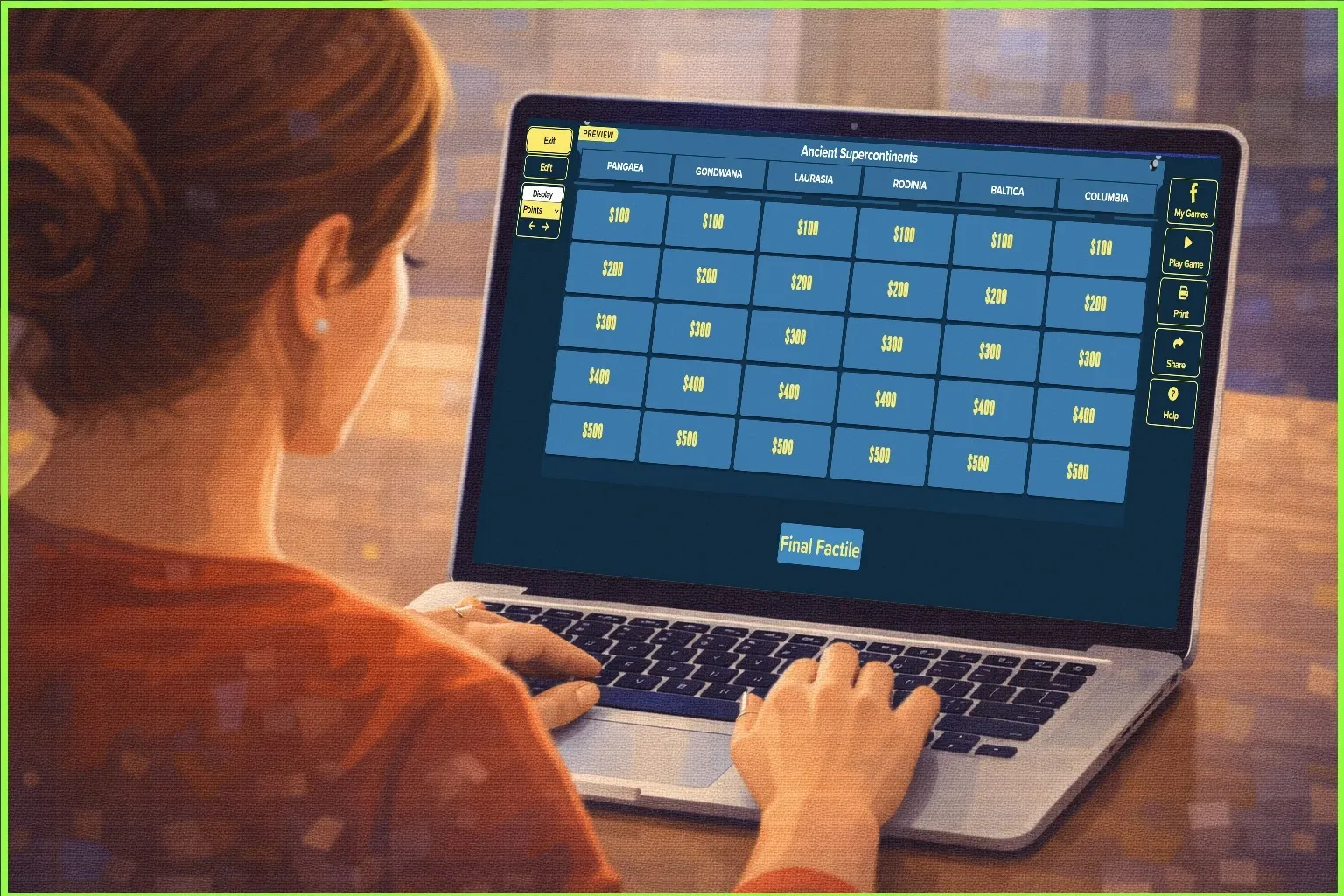
Good moderation isn’t rocket science, but it does take some practice.
Master the prep work, nail down your rules, run the game confidently, and end on a high note. When you get all this working together, you create experiences people remember and beg you to do again.
These techniques work whether you’re reviewing for a test, training new employees, or just having fun with family. The more you do it, the more natural it becomes. Eventually, you’ll be managing timers and handling disputes without even thinking about it.
Ready to try it yourself? Factile's Jeopardy game maker handles all the tech stuff so you can focus on being an awesome moderator. You get team settings, buzzer systems, and practice mode to rehearse your skills. Start with one of their Jeopardy templates or build something totally from scratch.
Thousands of teachers and trainers already use Factile to run incredible Jeopardy games. Whether it’s classroom reviews, corporate training, or special events, you can create your next game today and see what all the excitement is about!