Why We Built Buzzer Mode


If there’s one thing that brings an adrenaline rush when playing a Jeopardy game, it’s hitting the buzzer the moment you get that “aha!” moment. We even hit it so hard—slamming it and racing to answer first, right?
The buzzer isn’t just part of the game mechanics; it’s the one tool that makes the entire game exciting.
Without the buzzer, a game of Jeopardy wouldn’t have the same intensity or competition—especially when it comes to deciding who gets to answer first.
But here’s the problem: when teachers and event organizers started using digital tools to create their own Jeopardy games, something crucial was missing—the buzzer.
Suddenly, students were shouting over each other. Someone yells, “Me!” first, but three other kids swear they said it faster. The teacher ends up playing referee instead of host, and the whole thing quickly falls apart into chaos.
Corporate trainers ran into the same issue—team members arguing about who buzzed in first, awkward pauses, and that sinking feeling that this was supposed to be fun, not frustrating.
Most Jeopardy game makers back then treated the buzzer like an optional extra—something you could add later. Or worse, they ignored it completely.
We saw it differently.
When we built Factile, we knew one thing from day one: if you’re going to make a real Jeopardy game maker, the virtual buzzer can’t be an afterthought. It has to be built into the foundation.
And that’s exactly what we did.
The Problem We Saw in Other Tools
The digital trivia landscape had room for improvement when it came to real-time interaction features if you wanted to run an actual Jeopardy-style game.
Sure, you could create the game board, write your questions, and even display them on a screen. But when it came to letting players buzz in? That's where everything broke down.
Many existing platforms focused primarily on question creation and display, with a virtual buzzer functionality as a secondary consideration. The host would ask a question, and then... what? Players just yelled out answers. The fastest talker won, not the fastest thinker. Participants who are quieter often had fewer opportunities to contribute their answers and got drowned out every single time.
Some tools tried to work around it. "Just raise your hand!" or "Type your answer in the chat!" However, this approach changes the fundamental dynamics of playing Jeopardy, since it is essentially a buzzer game.
The few platforms that did attempt a buzzer feature made it clunky. Everyone had to be on the same device or the same network. Some even needed special hardware that cost a fortune.
And even when it worked, without a real buzzer system, moderators completely lost control of the game. Instead of running a smooth, exciting game show, they were stuck mediating arguments mid-game, and the energy in the room just faded.
Jeopardy is supposed to be an enjoyable game for everyone, and so we realized that a buzzer is a missing feature in other buzzer games online. Even more than that, this is a focal feature of making it an engaging game, and nobody’s solving it right.
Our work was cut out for us, and we found this to be a golden opportunity.
Why We Built Buzzer Mode Into Factile From Day One
When we started building Factile, we had a pretty simple mission.
We wanted to recreate the real Jeopardy experience, and in order to do that, we have to keep in mind that the virtual buzzer isn’t optional.
Therefore, from the very beginning, before we wrote a single line of code for the game board or designed the interface, before any of it, we asked ourselves one question: How do we nail the buzzer?
It wasn’t an “if”, “when”, “maybe”, or “or” kind of situation. It was a MUST. We have to create something that’s as seamless as possible to turn this beloved game into a phenomenal buzzer game online.
A core element of Jeopardy is that the buzzer creates the stakes. It rewards quick thinking. It adds that competitive edge that makes people lean forward in their seats instead of slouching back.
Without it, you lose the magic.
Anybody who moderates a buzzer game like Jeopardy - be it a teacher, corporate leader, or any of your family members - needed this feature. Even the players love to have a virtual buzzer, to capture that authentic game show feeling.
Factile’s Buzzer Mode was created from the get-go because we believed that it was the only way to build a real jeopardy game maker.
How We Designed Buzzer Mode
You might be curious about how we built a buzzer system that actually works. The technical challenge was significant, and that took some serious problem-solving.
We didn't just want a button that goes "ding." We needed something that would handle every situation – classrooms, remote games, corporate events, and family game nights. Different setups, different devices, different needs.
Would you believe it if we said that we built solutions for every single one?
Buzz from Any Device
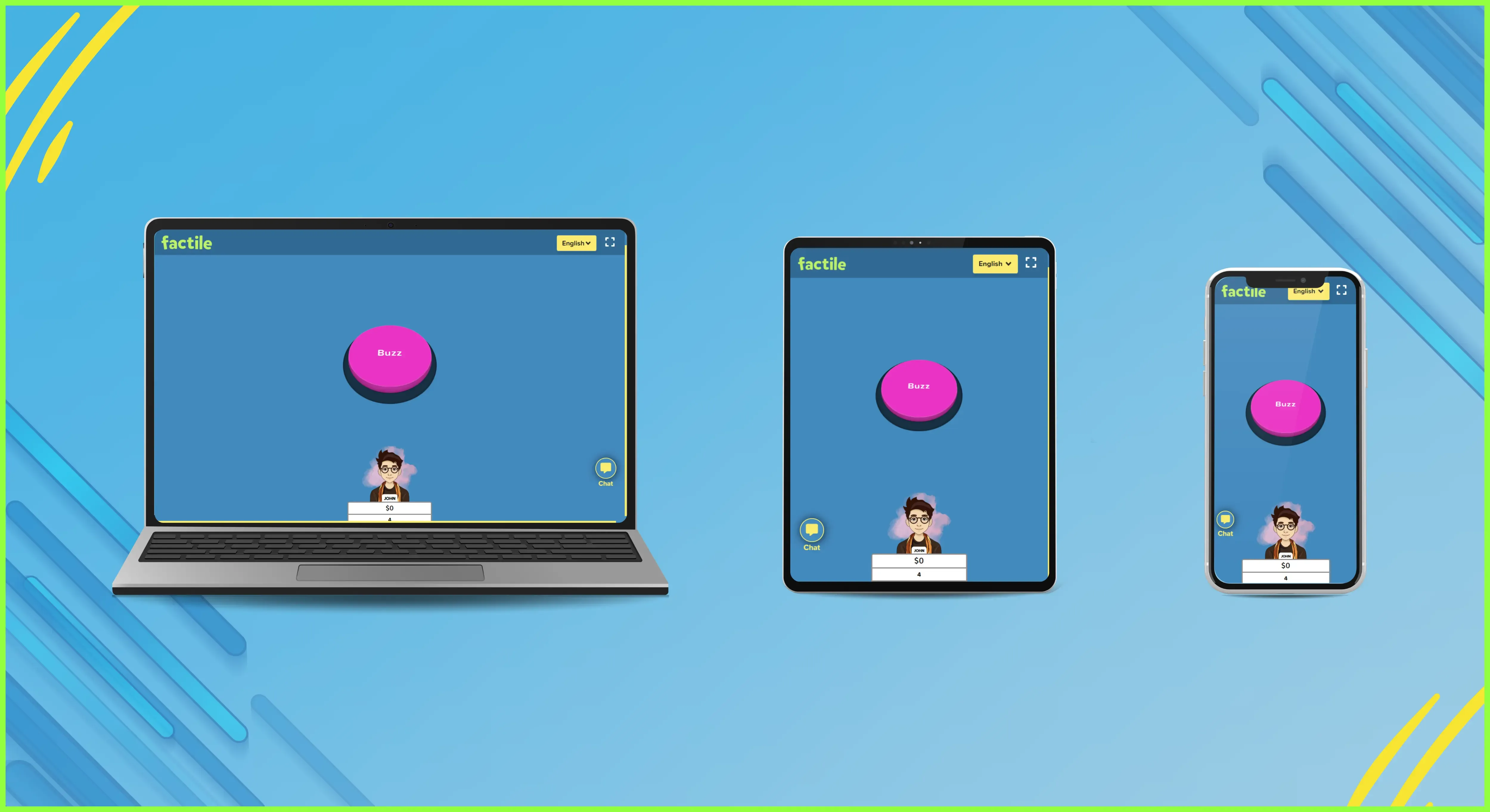
Here's a problem we saw constantly: other tools locked you into using specific devices or networks.
Everyone had to be on the same computer or connected to the same Wi-Fi. Worse, you needed to buy special buzzer hardware that only worked if everyone was in the same room.
Today’s technology has just opened a world of possibilities for us, and we saw an opportunity to embrace device diversity. The beauty of our advanced technology is that we can bring people together without any restriction on device use, and we connect with everyone, no matter where they are.
We used that very concept and advancement to our advantage to create an exceptional buzzer game online. Our solution? Factile lets anyone buzz in from whatever device they've got. Phone, tablet, computer – doesn't matter. They just need the game link, and you now have a virtual buzzer with it.
One of the biggest challenges we faced was building a system that could track millisecond-level timing across different devices and connections. If we’re doing the buzzer mode, then we might as well do it best to avoid any game contentions mid-game. We were adamant about figuring it out because it's the only way this works in the real world.
Moderator View

One thing that we noticed with other Jeopardy game makers was that even if they had a buzzer, they didn't show the order. Imagine you'd have three people buzz in, and the moderator had to... guess? Ask a non-participant who they thought buzzed first? We found this approach had limitations that affected gameplay flow.
We built a moderator screen that shows exactly who buzzed in first, second, and third so that you can see the entire order as clear as day.
You see a number pop up on each team's podium. A yellow finger points to whoever gets to answer. There’s no room for confusion or arguments.
If that first team gets it wrong, the yellow finger automatically moves to the next team in line. The moderator just scores it with a simple checkmark or X, and the system handles the rest.
It sounds simple, but this one feature saved game moderators from countless headaches.
Display Options
If there was one thing that was obvious to us when we started testing Factile, it was that different game setups need different screens.
A classroom with a projector needs something different than remote players on their phones. A corporate event with laptops needs something different than a family game night.
While many tools offered a single display format, we recognized that different settings require different solutions.
- Buzzer Only
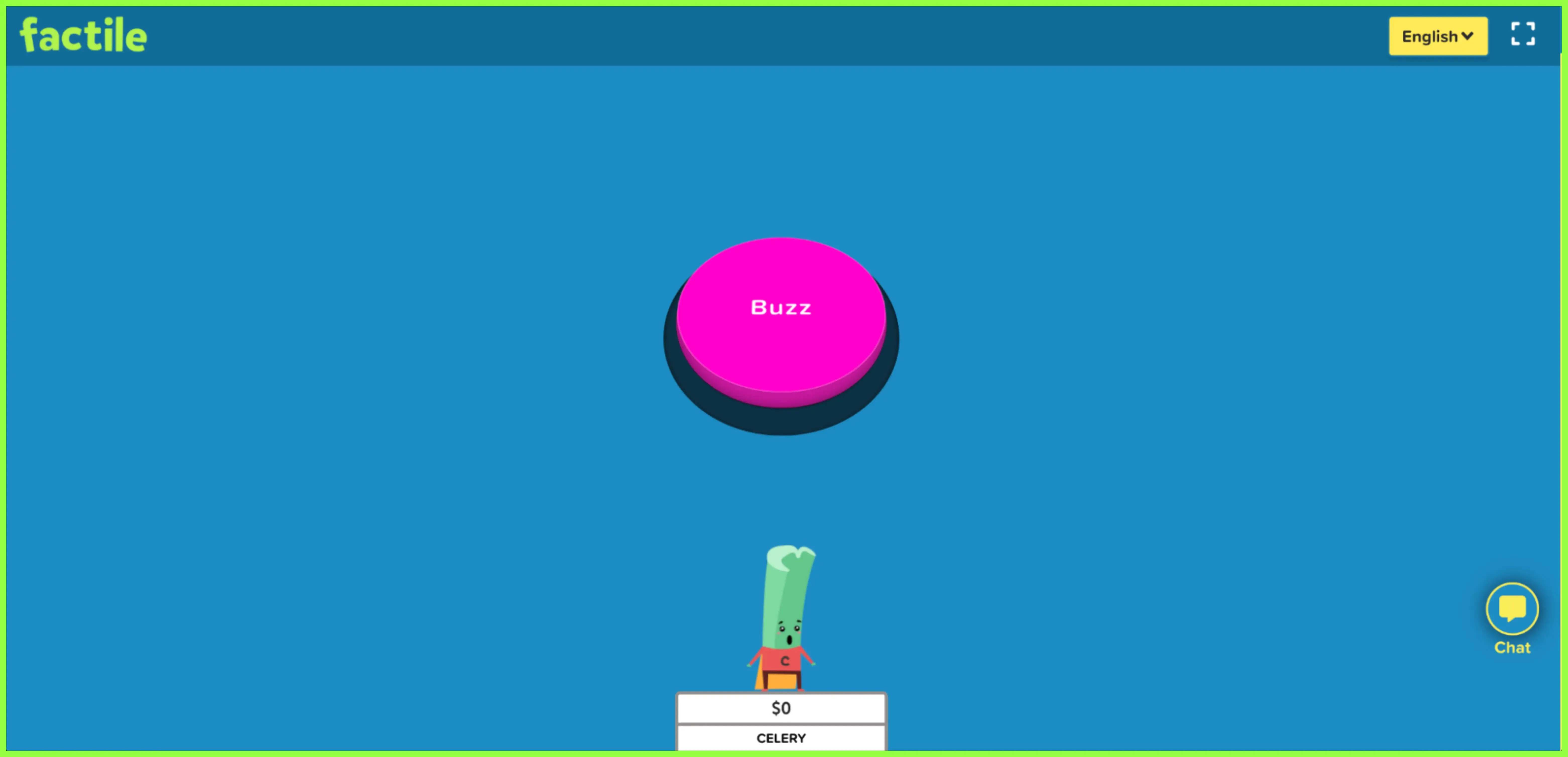
Perfect for classrooms. The game board and questions show on the big screen up front, and students just see the buzzer on their phones. Clean. Simple. No distractions.
- Question + Buzzer
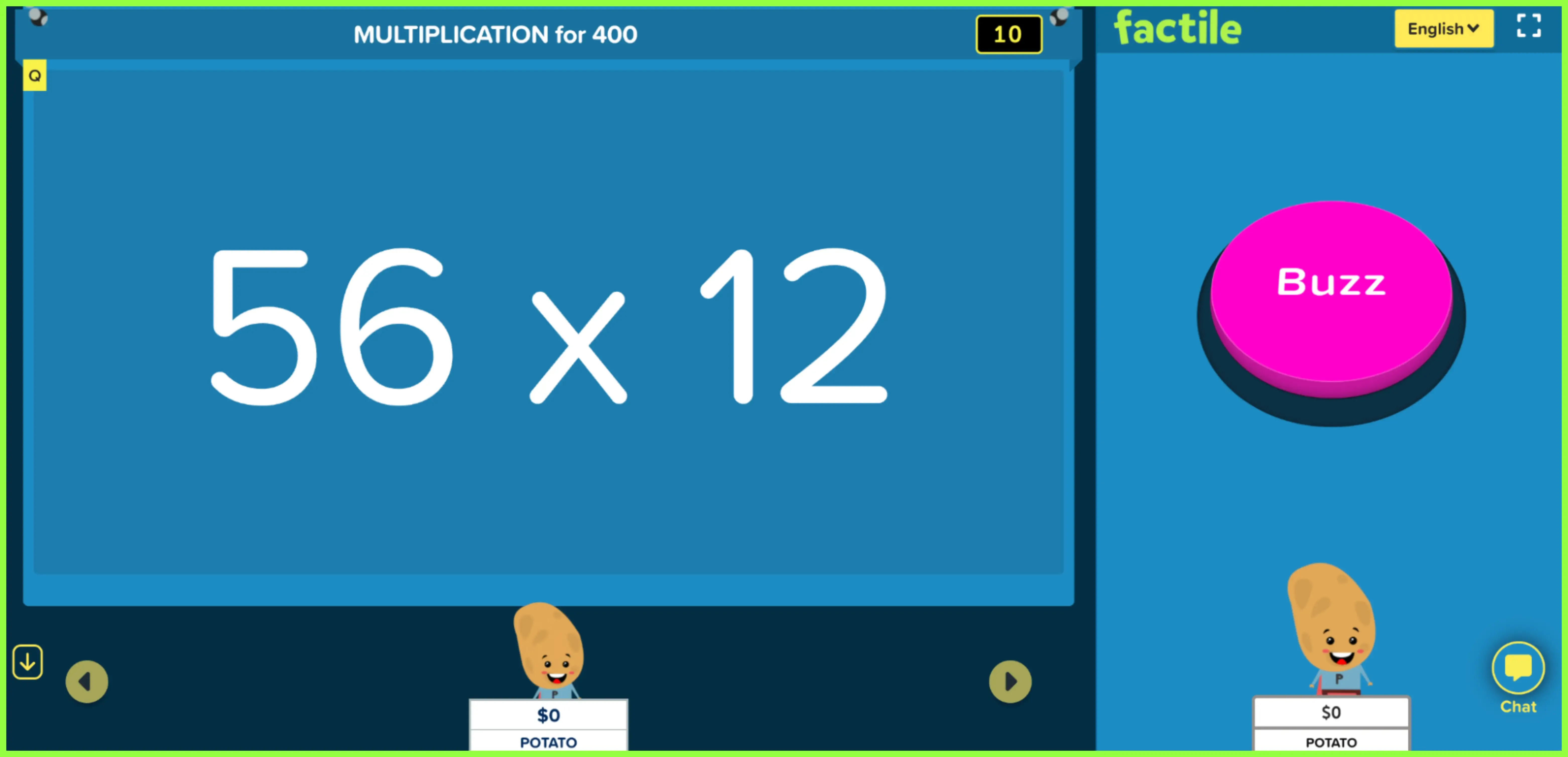
Best for small devices like smartphones. Players can read the question and hit the buzzer without squinting at a screen across the room.
- Gameboard + Buzzer
The full experience for tablets and computers. Players see the entire game board on the left, the buzzer on the right. Great for remote games where everyone's on their own device.
Customization for Fairness & Engagement
It’s not all the time that raw speed is fair for all situations. Yeah, Jeopardy rewards fast reflexes. But in a classroom or training session, you would prefer to even the playing field and not just have the speedy player winning every single point.
We have built in some options to level the playing field:
- Buzz-In Shuffle – This randomizes who can buzz in each round. It keeps one team from dominating just because they've got the fastest fingers. Everyone gets their shot.
- Second-Chance Buzz – If the first team gets it wrong, other teams can buzz in and try. This is actually how real Jeopardy works, and it keeps more people engaged instead of having them sit out once someone else buzzes.
- Limit Buzz-Ins – Sometimes you need to cap how many people can answer. Maybe only the first three teams get a shot. This stops the chaos when you've got a room full of eager players all hammering their buzzers.
These aren't required in every game. But they're there if you need them.
Multi-Member Teams
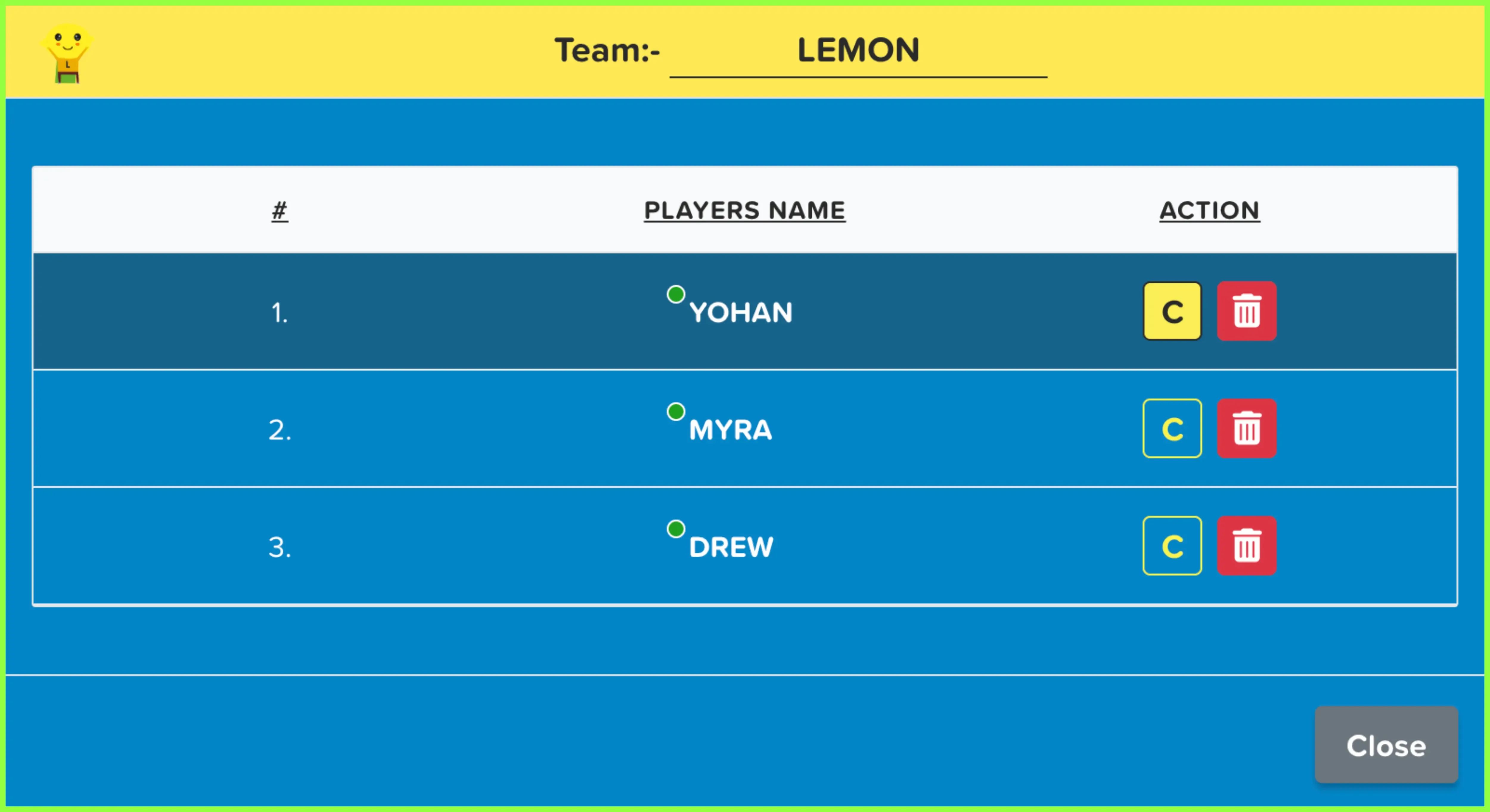
Most buzzer systems were built for individual players, since that’s how it is on the game show. However, we know this isn’t always the case for bigger groups like classrooms or corporate settings.
This was an area where we saw an opportunity to innovate. We designed Buzzer Mode to handle teams properly. You can have team captains, multiple team members, and a system that tracks everything fairly.
Everyone on the team can participate, but the buzzer keeps things organized so it's not just total chaos.
Final Factile with Buzzers
In other tools, when you get all the way to the final round and the buzzer system just... disappears. The drama of Final Jeopardy – the wagers, the final question, the tension – all of that fell flat because there was no good way to handle it digitally.
We integrated the buzzer right into Final Factile.
Teams enter their wagers from their own devices. Then, the final question appears, and players submit their answers. The moderator scores them, and boom – you get that classic Final Jeopardy reveal with all the stakes intact.
The tension, the excitement, and the entire game show vibe stay alive right through the end - how Jeopardy is supposed to be played.
The Impact of Buzzer Mode
Putting the Buzzer Mode in Factile was a total game-changer, especially in how people played digital Jeopardy games.
Teachers saw the biggest shift. Gone were the shouting matches on who answered first, or stopping the game every two minutes to settle disputes. They could finally run smooth, fair games where classroom management wasn't a constant battle.
Do you want to know what’s a more interesting result of the buzzer for them? The quiet kids started participating; suddenly, they're buzzing in and answering questions.
Corporate trainers had been struggling with the same mess. Running a professional training session that dissolves into arguments about "who answered first" doesn't exactly scream competence. But once they had a buzzer system that actually tracked the order and kept things fair, training sessions had real competitive energy without the chaos.
Teams stayed locked in because they trusted the system. Nobody's checking out or getting frustrated when they know the game's being run fairly.
Families got something they'd been missing, too – a way to actually recreate Jeopardy at home that felt real. Game nights went from everyone talking over each other to something that genuinely felt like a game show. Whether it’s grandparents now joining and buzzing in, or cousins playing along from different time zones, an entire family can enjoy a nice game of Jeopardy just like enjoying their favorite television quiz show.
Games became competitive without turning into a mess, engaging without being unfair, and exciting without stressing out whoever's running it.
The one review we get over and over: "This is the first time my Jeopardy games actually feel like Jeopardy." That's when we knew we built it right.
Closing Thoughts
We spent years thinking through every detail of how the buzzer should work. Not because we're perfectionists (okay, maybe a little), but mainly because we kept seeing the same problems everywhere.
That’s why we took the buzzer feature to heart, and made it a core element of our Jeopardy game. It's what makes Jeopardy feel like an authentic buzzer game experience.
While we've explained the features here, experiencing Buzzer Mode firsthand truly demonstrates its impact.
Set up a jeopardy game, turn on Buzzer Mode, and invite your students or team, or family to play. Watch what happens when everyone can buzz in from their phones, and the system actually tracks who was first.
You’ll then understand why it worked best, and why others are raving about it.